

The Rise of Niche Social Platforms: How to Find Your Community Online
Something shifted in how people experience social media. The thrill of a massive network with billions of users has given way to a quieter frustration — too much noise, too little meaning. That shift is driving millions of people toward niche social platforms, smaller and more intentional spaces where community actually feels like community.
Why Mainstream Social Networks Are No Longer Enough
Large social networks have become exhausting because they optimize for scale, not connection. Algorithms prioritize content that generates outrage or envy, not conversations that matter to you personally.
The result is what researchers sometimes call algorithm fatigue — a creeping sense that you're consuming content chosen for you by a machine, not discovering ideas or people you genuinely care about. Your feed fills with viral strangers and sponsored posts while the people and topics you actually want to follow get buried.
There's also the sheer volume problem. When a platform serves everyone, it serves no one particularly well. A professional trying to discuss industry trends competes for attention alongside memes, political arguments, and celebrity gossip. A hobbyist looking for peers who share their specific passion gets lost in an ocean of irrelevance.
This isn't a small complaint. A 2023 Gallup report found that a growing share of younger adults describe social media as a source of stress rather than connection. The appetite for something more focused — and more human — is real and growing.
What Makes a Platform "Niche" — and Why That Matters
A niche social platform is built around a specific interest, identity, profession, or purpose rather than trying to serve the broadest possible audience. The focus is intentional, and that intentionality shapes everything from the features offered to the culture of the community itself.
What distinguishes these platforms isn't just size. A niche platform can have millions of members — what defines it is purpose-driven design. Every feature, every moderation choice, every onboarding flow is built to serve a particular type of person with a particular goal in mind.
Micro-communities within these platforms go even further. Within a platform focused on independent filmmakers, you might find sub-groups for documentary directors, cinematographers, or festival circuit veterans. The specificity compounds, and so does the relevance of every conversation.
This matters because relevance is the foundation of genuine engagement. When the people around you share your context — your vocabulary, your challenges, your reference points — conversations go deeper faster.
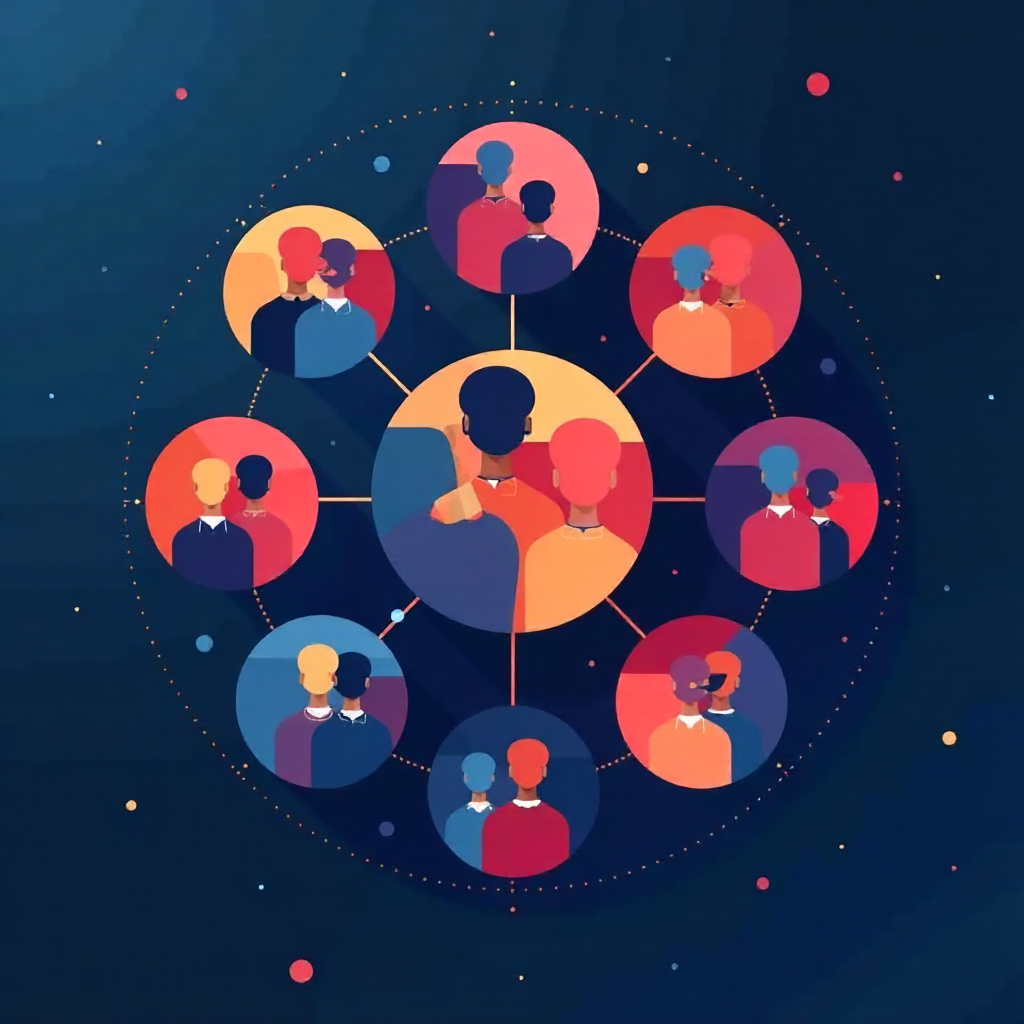
The Real Benefits of Joining a Focused Online Community
Joining a focused online community delivers something mainstream networks rarely can: the sense that you actually belong somewhere. That feeling has real, measurable effects on how people engage and what they get out of the experience.
Quality over quantity is the defining trade-off. You'll connect with fewer people, but those connections are more likely to be meaningful. Someone who finds you through a shared niche already has context for who you are and what you care about. That shared foundation compresses the awkward early stages of networking.
Community engagement tends to be significantly higher in focused spaces. Members post more, respond more, and return more often because the content is consistently relevant to them. User retention and loyalty on niche platforms frequently outperform broader networks on a per-user basis — not because the platform is stickier in a manipulative sense, but because members genuinely want to be there.
There's also a practical benefit that's easy to overlook: reduced overwhelm. When a community has a clear purpose, you know what to expect. You don't have to filter aggressively or build elaborate lists and mute rules just to see content you care about. The platform does that work by design.
For professionals, the advantages extend to career development. Interest-based networking within a focused community often leads to collaborations, referrals, and opportunities that would never surface on a general network where your professional identity competes with everything else you post.
Types of Niche Platforms and the Communities They Serve
Niche platforms span a wide range of categories, and knowing which type fits your goals is the first step toward finding the right space.
- Professional and industry-specific networks — Built for people in a particular field, trade, or career stage. These communities prioritize knowledge sharing, mentorship, and professional visibility within a defined domain.
- Hobby and interest-based communities — Organized around a shared passion, whether that's urban gardening, analog photography, tabletop gaming, or competitive baking. The focus is enjoyment and shared enthusiasm.
- Local and geographic communities — Designed to connect people in a specific city, neighborhood, or region. These platforms support local meetups, neighborhood organizing, and place-based identity.
- Identity and affinity groups — Built around shared experiences, backgrounds, or values — communities where members feel seen in ways that general platforms often fail to provide.
- Learning and skill-building communities — Structured around a shared goal of growth, often combining content, discussion, and peer accountability in one space.
Most people fit naturally into more than one category. A software developer who loves trail running and lives in a mid-sized city might find genuine value in three different niche spaces — each serving a different dimension of their life.
How to Find and Evaluate the Right Platform for You
Finding the right niche platform comes down to matching your goals with a community's culture, activity level, and design. A platform that's technically focused on your interest but has a toxic culture or a ghost-town activity level won't serve you.
Start with these four criteria when evaluating any community:
- Activity level — Are people posting and responding regularly? A community with the last post from six months ago is a dead end, regardless of how many members it claims.
- Moderation quality — Good moderation signals that someone cares about the community's health. Look for clear rules, active enforcement, and a culture where newcomers are welcomed rather than ignored.
- Community culture — Spend time reading before you post. Does the tone feel collaborative or competitive? Inclusive or cliquish? Trust your read on this — culture is hard to change and easy to feel.
- Alignment with your goals — A platform built for casual hobbyists may frustrate someone looking for professional development, and vice versa. Be honest about what you're actually looking for.
Platform discovery itself can be a challenge. Word of mouth remains one of the most reliable methods — ask people in your field or interest area where they spend their time online. Niche communities often grow through trusted referrals rather than advertising, which means the best ones aren't always the most visible.
Many platforms offer a trial period or free membership tier. Use it genuinely — lurk, post once or twice, and see how the community responds before committing your time and attention.
Making the Most of Your Niche Community — Tips for Genuine Engagement
Joining a focused community is just the beginning. The real value comes from how you show up once you're there.
Start by listening before you speak. Every community has unwritten norms — the topics that energize people, the questions that get ignored, the members who carry disproportionate influence. A week of observation before your first post will make that first post significantly more effective.
Contribute before you ask. This is the most consistent mistake new community members make: arriving with requests before they've offered anything. Share something useful, answer a question, or add a perspective to an existing thread. That establishes you as someone worth engaging with.
Be specific about who you are and what you're working on. Vague introductions get vague responses. In a niche community, specificity is a gift — it gives people an actual hook to connect with you on.
Finally, show up consistently rather than intensely. A burst of activity followed by a long absence is harder to sustain and less effective than a steady, modest presence. Community-led connections build over time through repeated, low-pressure interactions — not grand gestures.
The Future of Community-Driven Social Networking
The trajectory of social networking is pointing clearly toward smaller, more intentional spaces. The era of the all-purpose mega-platform as the default social experience is giving way to a more pluralistic model — one where people maintain a presence across several focused communities rather than a single sprawling network.
Platforms built around digital belonging — the sense that you've found your people in a specific context — are proving that retention and engagement follow meaning, not just scale. Investors and builders are paying attention. The infrastructure for niche community creation is becoming cheaper and more sophisticated, which means the number and quality of focused platforms will continue to grow.
What's emerging is something closer to how human community has always worked offline: people belong to multiple overlapping groups — a professional association, a neighborhood, a club, a circle of friends with a shared passion. Online platforms are finally starting to reflect that reality rather than trying to collapse it into a single feed.
For anyone who's felt like a stranger in their own social media experience, that shift is worth paying attention to. The communities you're looking for are out there. The question is knowing where to look — and being willing to invest in the spaces that actually fit.
Frequently Asked Questions
What is a niche social platform and how does it differ from mainstream networks?
A niche social platform is built around a specific interest, profession, or community purpose rather than serving the broadest possible audience. Unlike mainstream networks that prioritize scale and general content, niche platforms are designed for a targeted audience with shared context — which makes conversations more relevant and connections more meaningful.
Are niche platforms safe and well-moderated compared to larger networks?
Many niche platforms invest heavily in moderation precisely because community quality is their core value proposition. That said, quality varies. Before joining, look for visible community guidelines, active moderators, and a culture where members treat each other with respect. Smaller communities often respond faster to reports and concerns than large platforms with overwhelmed moderation teams.
Can I use multiple niche platforms at once without spreading myself too thin?
Yes, but be intentional about it. Two or three focused communities is manageable for most people; more than that tends to dilute your engagement everywhere. Prioritize the platforms where you get the most value and contribution feels natural. It's better to be genuinely present in two communities than passively signed up for six.
How do I know if an online community is active and worth joining?
Check the recency and frequency of posts, the quality of responses to new members, and whether discussions generate real back-and-forth or just broadcast-style announcements. A healthy community has visible signs of life: recent threads, engaged replies, and members who reference each other by name or history.
Are niche social platforms useful for professional networking, or just hobbies?
Both — and the distinction matters less than you might think. Some of the most effective professional networking happens in communities built around shared interests rather than explicit career goals. When people connect over a genuine passion or craft, the professional relationships that follow tend to be more durable and more generative than those formed in purely transactional networking contexts.